About this course
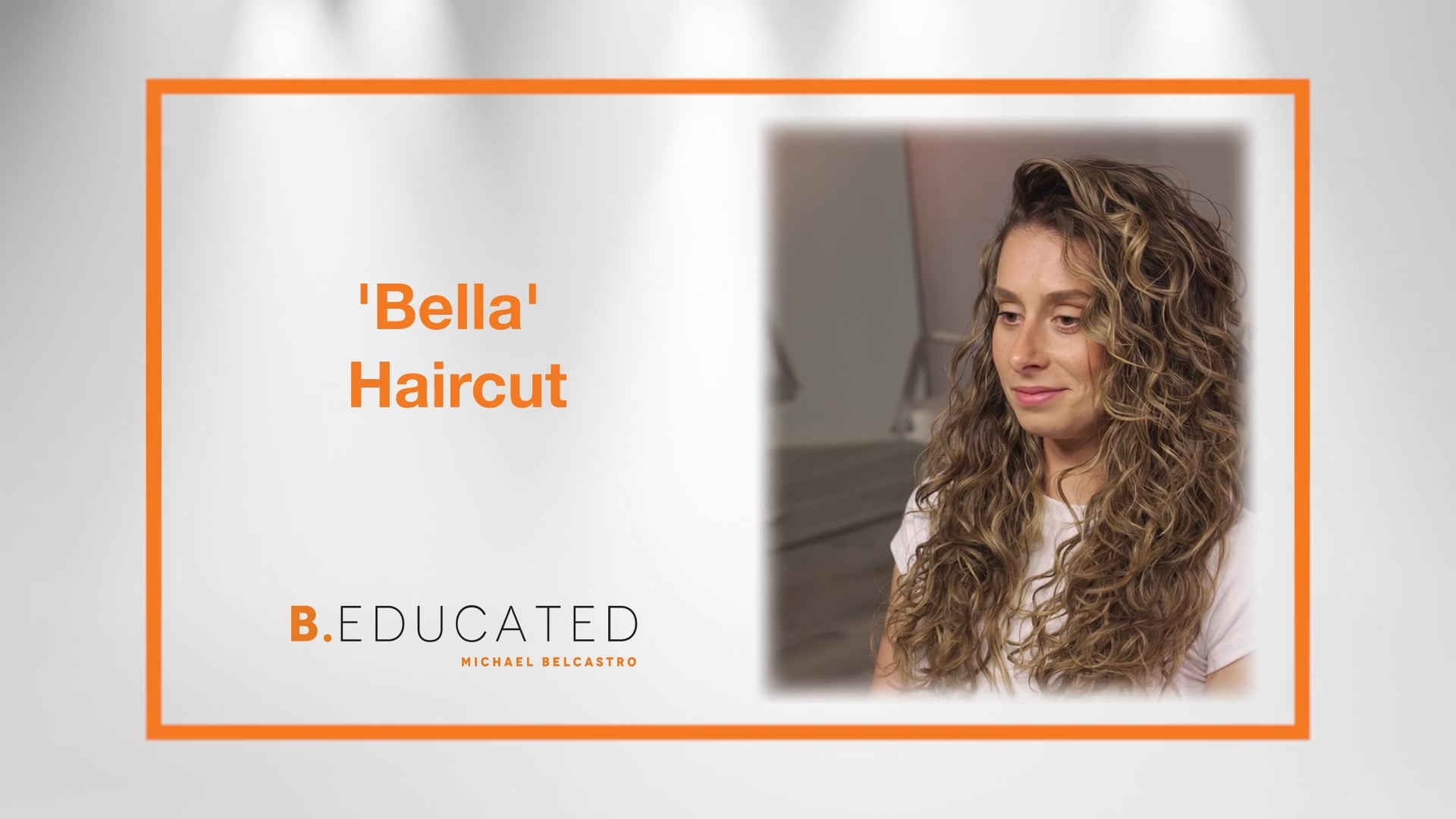
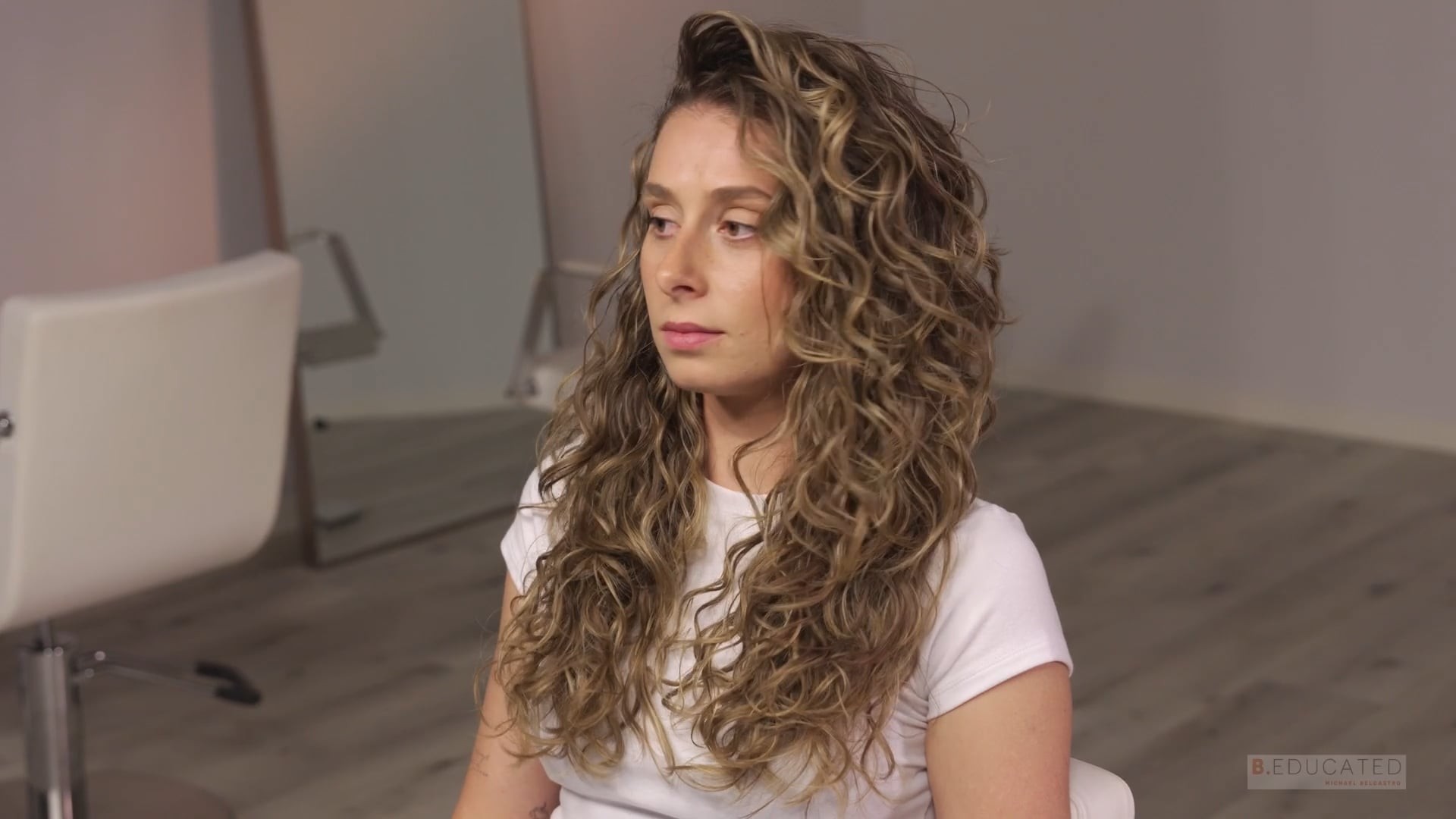
The Bella Cut is a dry cutting technique. Named after Bella, whose natural curls inspired the approach, the hair is gently ironed straight before cutting begins to see the true length and create a clean, even canvas to work from.
Cutting on straightened hair dry gives you complete control. You can see exactly where the length sits and how the ank of the blade is softening each line as you cut. When the curl returns, the shape comes to life, the lines you created translate into movement, definition, and a shape genuinely designed for the curl.
What You Will Learn
How to use the ank of the blade to soften a line and create natural movement
Why dry cutting gives you a truer picture of the shape and how to use that to your advantage
How to establish a stationary guide using the parting and direct every section back to it
How backward diagonal sections and consistent over-direction build the shape
How elevation controls softness — and why higher elevation creates a lighter, more natural fall
How hand position, elbow elevation, and body position influence the consistency of the result
How to adapt the weight distribution toward the back using a secondary guide at the crown
How to enhance a client's natural curl pattern rather than fight against it
Whether your client has a natural curl like Bella or straighter hair that moves with the cut, the principles of the Bella Cut translate across hair types. The technique is about reading what is in front of you and making decisions that serve the individual, not the formula.
The Bella Cut is a dry cutting technique. Named after Bella, whose natural curls inspired the approach, the hair is gently ironed straight before cutting begins to see the true length and create a clean, even canvas to work from.
Cutting on straightened hair dry gives you complete control. You can see exactly where the length sits and how the ank of the blade is softening each line as you cut. When the curl returns, the shape comes to life, the lines you created translate into movement, definition, and a shape genuinely designed for the curl.
What You Will Learn
How to use the ank of the blade to soften a line and create natural movement
Why dry cutting gives you a truer picture of the shape and how to use that to your advantage
How to establish a stationary guide using the parting and direct every section back to it
How backward diagonal sections and consistent over-direction build the shape
How elevation controls softness — and why higher elevation creates a lighter, more natural fall
How hand position, elbow elevation, and body position influence the consistency of the result
How to adapt the weight distribution toward the back using a secondary guide at the crown
How to enhance a client's natural curl pattern rather than fight against it
Whether your client has a natural curl like Bella or straighter hair that moves with the cut, the principles of the Bella Cut translate across hair types. The technique is about reading what is in front of you and making decisions that serve the individual, not the formula.
A successful haircut begins long before the first cut — it starts with connection. In this video I am assesing the growth patern and hairline for any irregularity.
Consultation is your opportunity to understand not just what your client wants, but why it matters to them. It is about creating trust, building rapport, and setting the tone for the entire experience.
Think of this stage as more than a checklist; it's a conversation that blends listening, empathy, and professional
insight. When you approach consultation with care, you're not only gathering information, you're shaping confidence and laying the foundation for a result they'll love.
Why Sectioning Matters
Correct sectioning is the foundation of every great haircut. It acts as your road map, guiding you from the beginning of the haircut right through to the final result.
A well-planned sectioning pattern allows you to work with clarity and intention, rather than guessing your way through. It ensures every section has purpose, and that every movement you make contributes to the overall shape.
When sectioning is clean and deliberate, you can clearly understand:
• Where your guide sits
• How elevation will affect weight and length
• How direction will shape the outcome
Because of this, the outcome becomes predictable. You're no longer hoping the haircut will work — you know how it will behave, based on the shapes and techniques you're applying.
For Bella's curl type, I applied a curl cream followed by a light gel. Curl cream first to hydrate and define, then gel to hold the shape and manage frizz. I also broke the hair down into sections before applying the product, this is something I want you to carry into every curly hair appointment. Sectioned application gives you even distribution, and that is what creates a consistent, predictable result from roots to ends.
From there, I diffused using a combination of hot and cold air, letting the diffuser do the work rather than moving through the hair constantly. Once dry, I used a tail comb to lift and enhance volume at the roots, then finished with a light oil and gloss wax mixed together, scrunched gently through the ends.
Visual image of the Claudia cut.
Head sheet diagram explaining each section step by step.
Written description of the Tiffany cut. Go over notes prior to beginning the haircut for a better understanding.
Working blank head sheet allows you to redraw each section of the haircut for your personal understanding.
Choice of product, application, stylisng and finish